
DECORATION & SAMPLE APPROVAL
How to Check Hot-Stamped Cosmetic Packaging Samples Before Approval
A metallic logo can look convincing in a photograph while leaving important approval questions unanswered. Check the artwork, placement, appearance and agreed durability requirements separately before releasing your packaging for production.
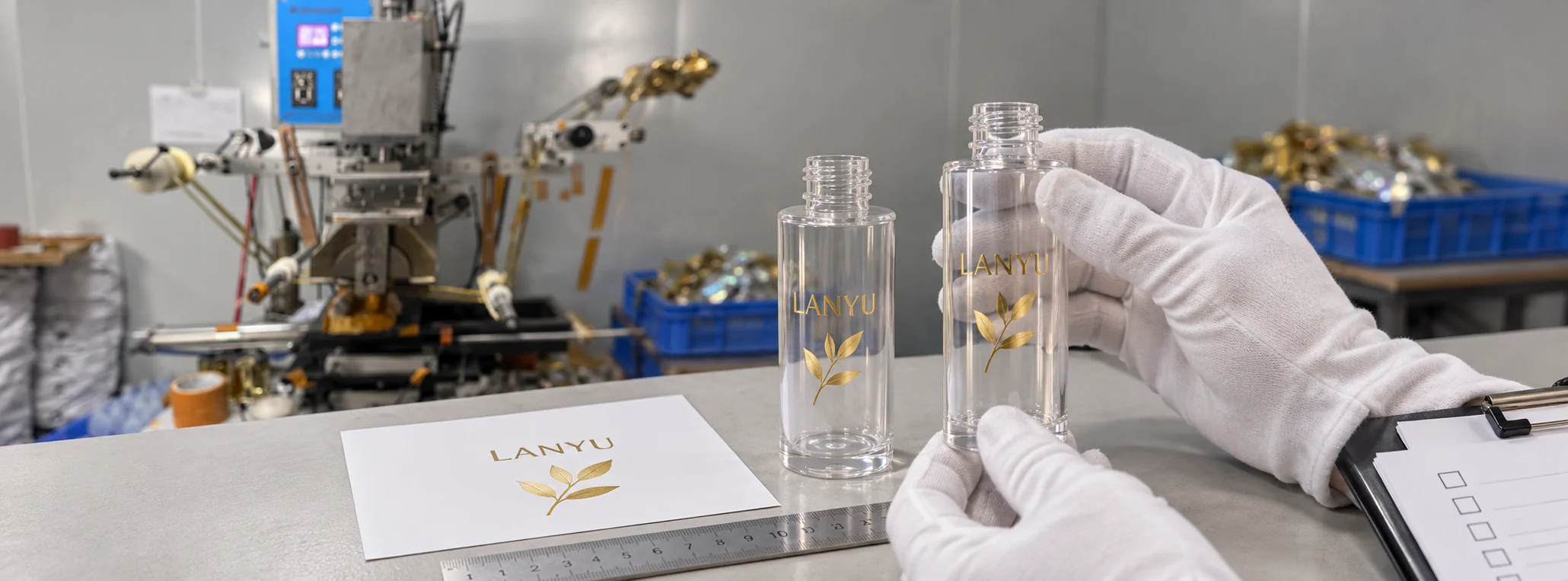
Identify exactly what the sample represents
Before judging the finish, confirm the container model, material, surface treatment and artwork revision. Ask whether the sample uses the proposed production decoration or is a visual mock-up. A sample made to demonstrate logo position may not represent the final metallic shade or production process.
Record the sample ID and date. Review the bottle or jar with its intended closure fitted, alongside the carton when available. A loose component can hide alignment or presentation issues that become obvious in the assembled pack.
Check the logo against the artwork
Compare spelling, proportions and individual details with the agreed artwork. Inspect narrow gaps between letters, fine lines, small symbols and the edges of solid areas. Look for missing areas, unwanted specks, filled-in gaps or edges that make the artwork difficult to read.
Start at the normal viewing distance agreed for the project, then use a close-up to explain any concern. A magnified photo is useful evidence, but it should not silently become a stricter acceptance rule than the one agreed for production.
For example, if the centre of a letter appears filled in, mark that exact location on the photo and ask for review. Avoid a vague comment such as “the gold is not premium enough,” which gives the supplier no clear correction target.
Measure placement from a repeatable reference
Choose reference points that both sides can locate: the bottom edge, a moulded panel or another agreed feature. Record how the artwork is positioned relative to that reference. On curved containers, agree how the position will be checked rather than measuring across a curved surface differently on each side.
Check the relationship between the metallic detail, printed text and closure orientation. On a carton, review its position relative to the panel, fold and cut edges. Set project-specific tolerances before approval; there is no single placement allowance that this guide can apply to every bottle and box.
Compare metallic appearance on the actual surface
Review the physical sample beside the agreed physical finish reference under consistent lighting. Turn it through several angles and distinguish the intended reflective effect from an unwanted patchy appearance. Use comparable conditions when reviewing several samples.
Do not approve a shade solely from a phone screen: a photo is useful for communication, but its lighting and display settings are not a dependable physical colour reference. Also avoid assuming that a metallic effect approved on a smooth bottle will look identical on printed paperboard.
Hot-stamping suppliers offer different finishes and substrate-specific solutions. KURZ describes hot-stamping applications across paperboard, printed and laminated surfaces; its technical overview provides general process context. It is not evidence of which supplier or foil LANYU uses for your order.
Agree durability checks instead of improvising a test
A good-looking sample does not answer whether the decoration meets the handling requirements of your product. Tell the supplier about the intended filling, assembly, transport and use conditions. Agree which adhesion, rubbing or exposure checks are relevant, how they will be performed and what result is acceptable.
Record the test conditions, sample preparation, number of samples and evaluation criteria. Do not treat a fingernail scratch or an unspecified tape pull as a universal pass/fail test. Equally, do not infer formula resistance or transport performance from a visual inspection.
This is a buyer’s approval checklist, not a statement that LANYU performs a particular laboratory test on every order. Confirm the available inspection method and records for your selected packaging with the project team.
Send a clear approval record
Separate accepted details from open issues. Identify the sample, artwork revision and physical finish reference, then list each requested change with an annotated photo. Ask whether any change affects the parts you have already approved and whether a revised sample is needed.
- Artwork: correct revision, readable text and agreed detail reproduction.
- Position: recorded reference points and agreed placement criteria.
- Appearance: physical reference and review conditions identified.
- Performance: relevant checks, criteria and results recorded.
- Decision: approved scope, unresolved items and next action stated.
An illustrative review note could read: “Sample HS-02: logo spelling and metallic appearance accepted against the retained reference. Please review the filled gap in the marked letter and provide a revised sample. Durability approval remains open pending the agreed check.” This is an example, not a customer case.
Keep a labelled approval sample where possible and agree what happens if the substrate, coating, artwork or decoration material changes. Sample approval should leave both parties with the same reference for production review.
Planning a metallic logo or accent?
Send your artwork, container reference and intended finish. Identify which appearance and handling requirements need review before sampling.
Contact Our Team